10 Features That Matter Most in Budtender Training Software
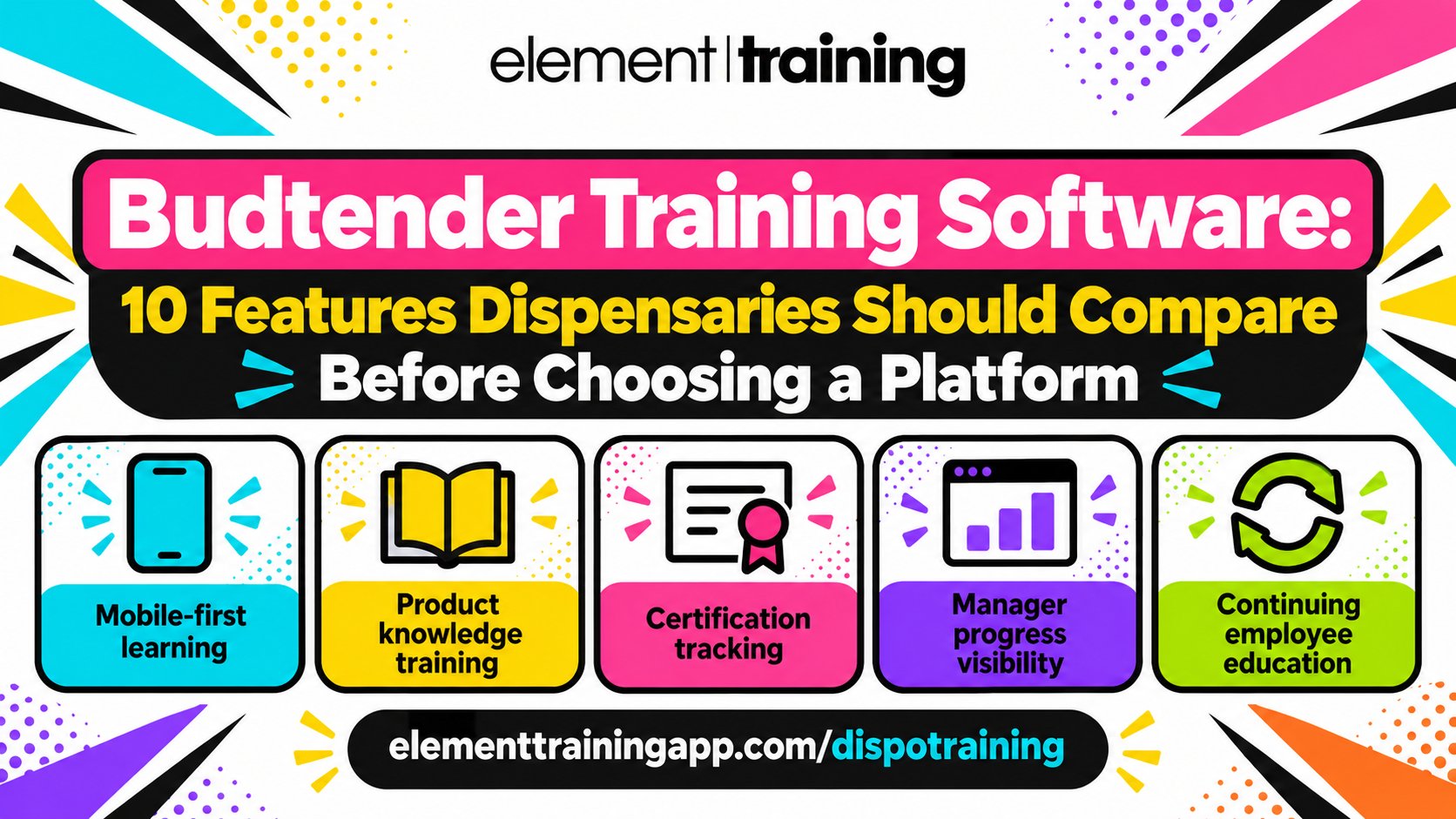
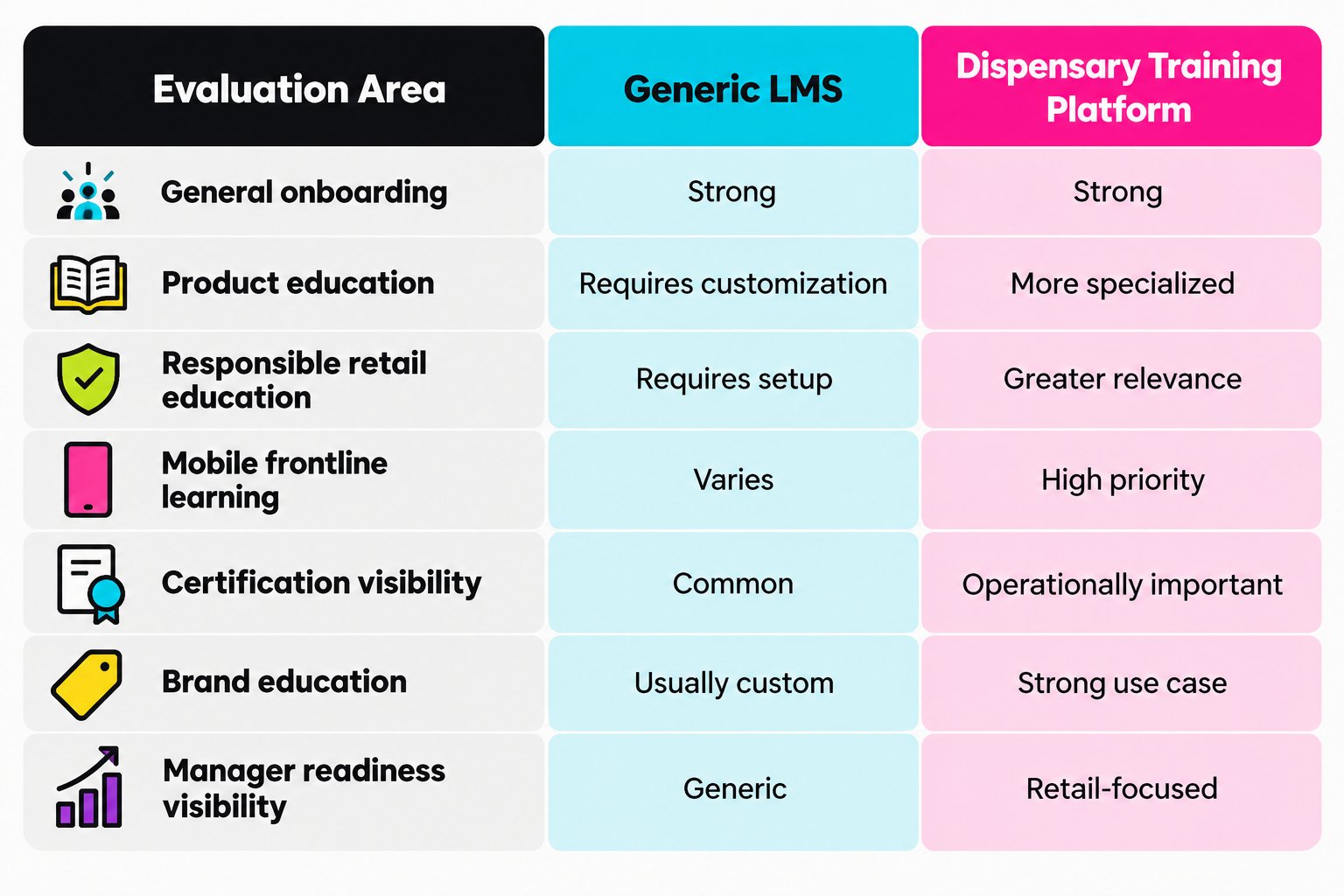
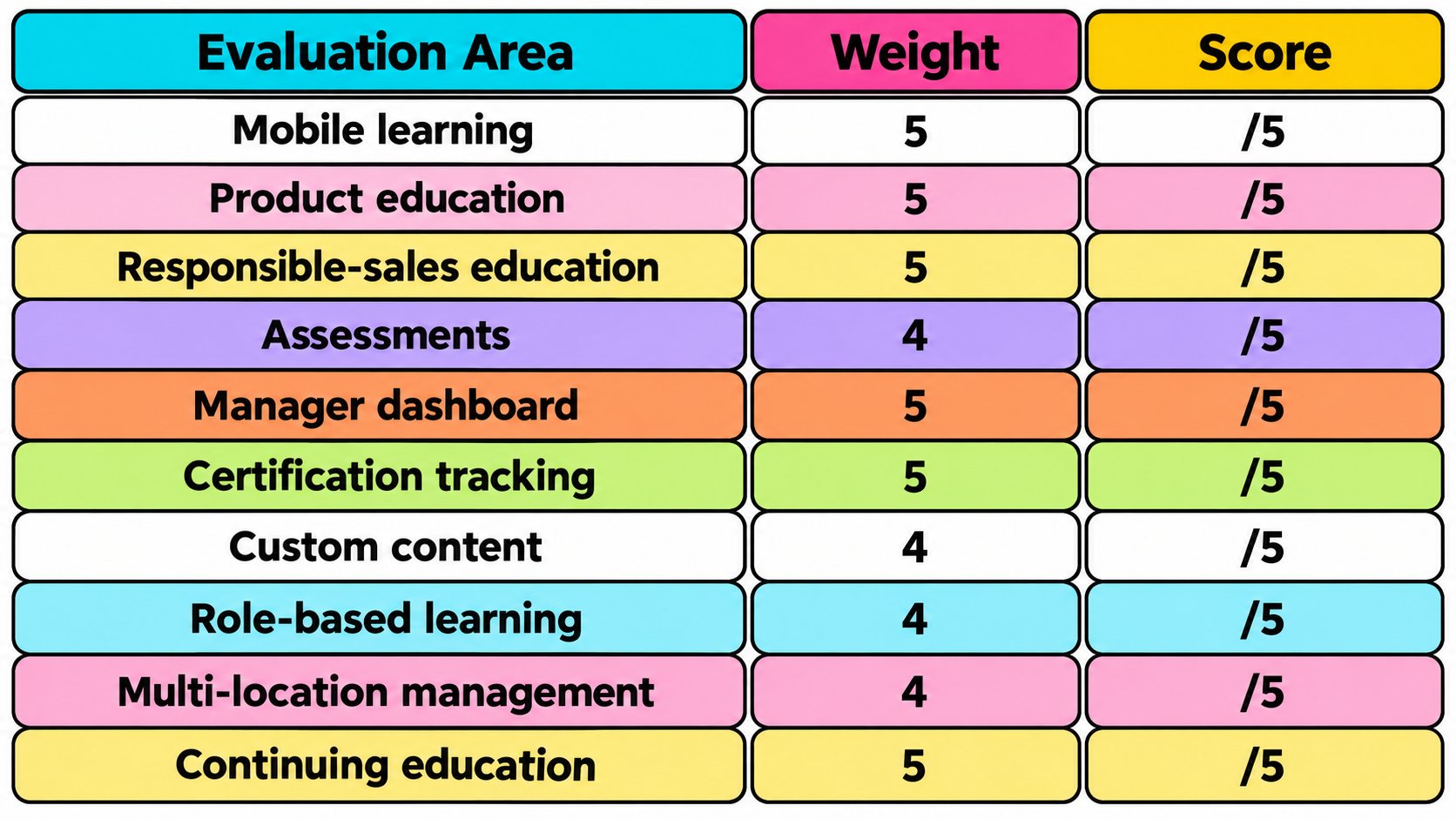
Choosing budtender training software works best when operators compare how each feature supports real retail work. The strongest platforms make learning easier for associates, give managers clearer visibility, and help teams maintain consistent education across roles and locations. These ten features provide a practical framework for comparing platforms beyond surface-level demos or feature lists.
1. Mobile-first learning keeps training accessible
Mobile-first learning gives associates access to training from smartphones and tablets, which can make education easier to fit around retail schedules. Short modules, responsive layouts, and resume functionality help employees continue from where they left off instead of restarting a lesson.
Earlier research involving 158 budtenders found that 56% reported formal training, and among those who received training, 65% reported completing an online course. The study reflects an earlier stage of the industry, yet it shows that online education has already played an important role in frontline learning.
When comparing platforms, buyers should review:
- Device access: Check whether lessons work smoothly across smartphones and tablets.
- Module length: Look for focused lessons that fit practical learning periods.
- Resume functionality: Employees should be able to continue training from their previous stopping point.
- Progress synchronization: Completion data should update across supported devices.
A practical example would be an associate completing a short product module between scheduled responsibilities, then returning later to finish the assessment from the same device.
2. Product knowledge training supports stronger customer conversations
Product knowledge training gives associates a structured way to understand product categories, formats, characteristics, brand information, and new releases. This matters because employees often need to explain differences clearly and respond to customer questions with confidence.
An earlier peer-reviewed study found that 94% of surveyed dispensary staff reported providing specific cannabis-related advice to customers or patients. Because the study reflects an earlier industry period, the finding works best as historical context for why structured frontline education became important.
Buyers should compare whether a platform can support:
- Product categories: Cover the core formats associates encounter.
- Brand modules: Provide space for brand-specific education.
- New-product learning: Make it easy to add training when assortments change.
- Refresher education: Help employees revisit important topics over time.
A useful platform should make product education part of an ongoing learning cycle rather than a one-time orientation topic.
3. Responsible-sales education keeps essential practices visible
Responsible-sales education helps associates revisit the procedures they use during everyday retail interactions. These lessons can reinforce age verification, store policies, purchase procedures, local requirements, and responsible customer communication.
Buyers should compare how easily the platform can organize location-relevant learning, assign refresher modules, and document completion. The goal should be to keep important procedures visible and accessible as employees develop experience.
A practical example could involve assigning a refresher lesson before a busy retail period so associates can review store procedures and age-verification expectations in advance.
4. Role-based learning gives every employee relevant training
Different roles require different learning paths. New associates may need orientation and foundational product education, while managers may need coaching tools, reporting visibility, and team-development content. Inventory and operations staff may require another set of workflows.
Your research identifies role-based learning tracks as a core comparison criterion for dispensary training platforms.
Buyers should compare whether the platform can assign learning by:
- Employee role: Match training with job responsibilities.
- Experience level: Separate foundational and advanced learning.
- Location: Support shared standards with local differences.
- Department: Deliver relevant modules to managers, inventory teams, and frontline associates.
A structured role-based system helps keep training focused and reduces the time employees spend on material that adds limited value to their responsibilities.
5. Assessments reveal knowledge gaps
Assessments help managers understand whether employees have absorbed key information. Short quizzes, pre-training assessments, post-training assessments, and knowledge checks can provide useful signals about where additional coaching may help.
Your research highlights pre- and post-module assessments as a way to verify understanding rather than relying only on course completion.
Buyers should compare:
- Quiz flexibility: Check whether assessments support different question types.
- Passing thresholds: Review how completion and scoring rules work.
- Pre-training checks: Identify existing knowledge before assigning content.
- Post-training checks: Measure understanding after a module.
- Manager visibility: Make results easy to review for coaching.
For example, if several employees struggle with the same topic, the manager can assign a refresher module or discuss the issue during team coaching.
6. Custom training keeps store procedures consistent
Every retail operation has its own procedures, service expectations, workflows, and internal policies. Custom training gives managers a way to bring those details into the same learning system used for broader employee education.
Useful content can include:
- Opening procedures: Clarify routine responsibilities at the beginning of a shift.
- Closing procedures: Standardize end-of-day workflows.
- Customer service expectations: Reinforce the experience the store wants employees to deliver.
- Cash-handling procedures: Provide consistent internal guidance.
- Safety policies: Keep workplace expectations accessible.
- Employee handbooks: Connect company policies with onboarding.
- Internal workflows: Document store-specific processes in one place.
A frontline discussion in r/budtenders highlighted the practical value of written SOPs, with participants describing how documented procedures can help keep important operational knowledge accessible across the team. This works as a practitioner perspective rather than factual evidence.
After defining store-specific learning, managers can connect those procedures with broader essential budtender training skills so employees understand both the workflow and the skills behind it.
7. Certification tracking keeps completion records organized
Certification tracking helps managers keep course completions, training records, renewal dates, and continuing education status in one place. This can reduce manual follow-up and make employee-level progress easier to review.
Buyers should compare whether the platform provides:
- Completion records: Show which courses each employee has finished.
- Certificate storage: Keep training documentation organized.
- Renewal visibility: Surface upcoming renewal dates where supported.
- Continuing education records: Track ongoing learning over time.
- Employee-level status: Give managers a clear view of each team member.
The software should support internal training visibility while remaining separate from jurisdiction-specific licensing processes that may require additional systems or government procedures.
8. Manager dashboards turn training data into action
A manager dashboard should make training easier to manage rather than simply display large amounts of data. The most useful dashboards answer practical questions managers face every week.
Your research identifies progress, completion certificates, test scores, and manager-level reporting as important evaluation criteria.
A useful dashboard should help managers answer:
- Assigned learning: Who completed each required module?
- Coaching needs: Which employees could benefit from additional support?
- Course difficulty: Which topics produce lower assessment results?
- Certificate status: Which records require attention?
- Location performance: Which teams may need additional training?
For example, a multi-location operator could review completion status across stores, then follow up with managers at locations where several employees still have assigned learning in progress.
9. Multi-location management creates training consistency
Multi-location retailers need a balance between shared standards and local flexibility. A strong platform should make it possible to assign core training centrally while still supporting location-specific procedures and learning needs.
Buyers should compare:
- Central assignments: Send required learning across multiple stores.
- Location visibility: Review progress by store.
- Shared learning standards: Keep core onboarding and education consistent.
- Role-based distribution: Assign different modules by responsibility.
- Local customization: Add store-specific procedures where appropriate.
- New-location onboarding: Apply established training frameworks as the business expands.
A practical example could involve assigning the same foundational product module to every store while allowing each location to add its own operating procedures and local training requirements.
10. Continuing education keeps learning active after onboarding
Employee development becomes more valuable when learning continues after the first weeks on the job. Continuing education gives teams a structured way to keep skills current as products, brands, policies, and customer-service expectations evolve.
Ongoing learning can cover:
- New products: Introduce additions to the assortment.
- Brand launches: Prepare associates before new products reach the floor.
- Refresher education: Revisit important concepts over time.
- Customer-service skills: Strengthen everyday retail interactions.
- Sales fundamentals: Build confidence around needs-based conversations.
- Policy updates: Keep internal procedures current.
- Career development: Support associates as they take on greater responsibility.
Buyers should compare how easy it is to assign recurring learning, update modules, and track employee development over time.
A strong continuing education strategy also gives teams a reason to return to the platform after onboarding. Operators looking for more ways to build an ongoing learning program can explore Element Training’s dispensary training resources.